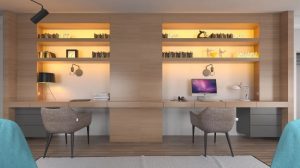
Transforming your home office into a haven of productivity starts with thoughtful lighting. The right illumination not only enhances your workspace’s aesthetic appeal but also significantly impacts your focus, comfort, and overall well-being. This exploration delves into the art of home office lighting, guiding you through selecting fixtures, optimizing color temperatures, and strategically integrating light to maximize efficiency and create a stimulating environment.
We’ll cover various lighting types—from desk lamps and overhead fixtures to ambient lighting solutions—and explore how to leverage natural light effectively. Understanding the nuances of color temperature and its influence on mood and concentration is key, as is learning how to control ambiance with dimmers and smart lighting technology. Ultimately, this guide empowers you to design a workspace that is both functional and visually appealing, supporting your productivity and creating a space you genuinely enjoy.
Home Office Design Considerations
Effective home office lighting isn’t just about illuminating your workspace; it’s about creating an environment that enhances productivity, comfort, and aesthetic appeal. By carefully integrating lighting with other design elements, you can transform your home office into a functional and inspiring space.
Lighting Integration with Design Elements
The interplay between lighting, furniture, décor, and wall color significantly impacts the overall ambiance of your home office. For instance, a warm-toned wall paint (like a soft beige or greige) paired with warm-white LED task lighting can create a cozy and inviting atmosphere. Conversely, a cooler-toned wall (such as a light grey or blue) might benefit from cooler-toned lighting to maintain a bright and focused workspace.
Consider the material and color of your furniture as well; dark wood furniture might require brighter lighting to prevent the space from feeling too dim, while lighter furniture allows for more flexibility in lighting choices. Decorative elements, such as lamps with interesting bases or strategically placed artwork, can add personality and visual interest while contributing to the overall lighting scheme.
Lighting to Define Zones
Dividing your home office into distinct zones using lighting is a highly effective design strategy. A dedicated work area, for example, could benefit from bright, task-oriented lighting such as a desk lamp with adjustable brightness and color temperature. This allows for focused work without eye strain. In contrast, a reading nook could feature softer, ambient lighting, perhaps a floor lamp with a warm-toned bulb or even integrated LED strip lighting under shelving.
This creates a relaxed and comfortable atmosphere conducive to reading or contemplation. A combination of ambient, task, and accent lighting in different zones ensures a balanced and versatile workspace.
Example of a Functional and Aesthetic Home Office Setup
Imagine a home office with calming light grey walls and light oak wood furniture. A large window provides ample natural light during the day, complemented by a sleek, modern desk lamp with adjustable arm and brightness for task lighting. A stylish floor lamp with a linen shade sits in the reading nook, providing warm, ambient lighting. Accent lighting, such as small LED spotlights highlighting artwork or shelving, adds visual interest.
The overall effect is a sophisticated and functional workspace that is both inviting and productive. The strategic use of lighting, from bright task lighting to warm ambient lighting, ensures that the space is adaptable to various activities.
Step-by-Step Guide to Planning Home Office Lighting
Effective home office lighting planning involves a systematic approach.
- Measure your space: Accurately measure the dimensions of your home office, noting the location of windows, doors, and furniture. This information is crucial for determining the appropriate number and placement of light fixtures.
- Assess natural light: Determine the amount and direction of natural light entering your office. This will help you determine the supplementary artificial lighting needed.
- Identify lighting needs: Consider the different activities you will be performing in your office. Do you need bright task lighting for detailed work? Will you need softer ambient lighting for relaxation? Will you need accent lighting to highlight features?
- Select appropriate fixtures: Based on your needs and the style of your office, choose lighting fixtures that meet your requirements. This might include desk lamps, floor lamps, ceiling lights, or recessed lighting.
- Consider color temperature: Choose light bulbs with color temperatures appropriate for the different zones in your office. Cooler color temperatures (5000K-6500K) are suitable for task lighting, while warmer temperatures (2700K-3000K) are better for ambient lighting.
- Plan placement and wiring: Carefully plan the placement of your lighting fixtures to ensure adequate illumination in all areas. If necessary, consult an electrician for wiring and installation.
- Test and adjust: After installation, test your lighting scheme and make adjustments as needed to optimize the brightness, color temperature, and overall ambiance of your home office.
Designing the perfect home office lighting scheme is a journey of balancing functionality, aesthetics, and personal preference. By carefully considering the type of lighting, color temperature, placement, and integration with your existing décor, you can create a workspace that enhances productivity and fosters a positive work environment. Remember, the goal is to craft a space that not only meets your practical needs but also inspires creativity and supports your well-being.
With the right lighting plan, your home office can become a truly productive and enjoyable space.
Detailed FAQs
What is the best color temperature for a home office?
A neutral color temperature (around 4000K) is generally recommended for home offices, offering a balance between warm and cool tones that promotes focus and reduces eye strain. However, you may want warmer tones (2700-3000K) in relaxation areas.
How many light sources should I use in my home office?
Layered lighting is best! Aim for at least three: ambient (general illumination), task (focused light for specific tasks), and accent (highlighting features or artwork). This prevents harsh shadows and provides flexibility.
How can I reduce glare on my computer screen?
Position your monitor to avoid direct light sources. Use anti-glare screen protectors and adjust your lighting to minimize reflections. Consider using task lighting that illuminates your workspace without shining directly onto the screen.